As I'm sure many of you have noticed (if any of you still check the blog), Nora and I have pretty much abandoned the Sleepy Dog Farm blog. First, this was only intended to be a year long venture 'cause you all know Nora and I aren't exactly known for our focus and staying power. Second, Google has all but abandoned the blogging platform we are using for this blog.
However, I have started a spin-off blog. No promises as to how faithfully I will post, but it began as my garden journal, as well as my place to rant against climate change and the systematic destruction of the ecological balance on this planet. Venture in for a read if this entices you at all. Nora remains enlisted -- much to her chagrin -- as the resident photographer. You can find it at https://wildlifegardenerblog.wordpress.com/
Showing posts with label Gardening. Show all posts
Sunday, March 20, 2016
Why You Should Garden Organically
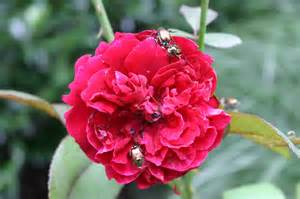
It's tempting to reach for the chemical sprays or powders when your walk into your garden and find your favorite rose overrun with aphids or Japanese beetles, or find your cauliflower beset by cabbage worms. After all, what harm can a localized spray possibly do?

The answer is quite a lot. The fact is 90% or more of all insects are beneficial and harmless, and no matter how "localized" the spray, the chemical will kill all insects -- not just the "pests." A diverse collection of insects in your garden/yard translates into good pollination and fruit development, and a natural, non-toxic check on the growth of "pests." We need insects in the ecosystem. The alternative would be hand-pollinating our fruit and vegetables to continue our food supply. Clearly not a viable or reasonable alternative.
The same ban should apply to the use of synthetic fertilizers, such as the ever popular "blue stuff"
(i.e., Miracle-Gro), or the various types of fertilizers used to produce the perfect, weed-free lawn so favored by suburban America. Each of these poses dangers to water (seeping into ground water or flowing into streams and rivers, which then carry the chemicals into the ocean creating the algae blooms that have become an increasingly significant pollution issue), wildlife, and humans.
The alternatives are easy and so much healthier for us, our local wildlife and the planet. First, use compost instead of synthetic fertilizers to feed the soil and your plants. Even if you have a small urban or suburban yard, you can easily create a compost bin in a discreet corner of your yard, or buy one of the bins that can be easily rotated (available at most garden stores). Toss all vegetable/green matter, eggshells, coffee grounds, and yard clippings onto the pile (avoid adding weeds, leaves, or woody material unless your compost pile maintains a high internal temperature). Flip periodically, and eventually it will decompose and create a beautiful, rich compost that will add nutrients to your soil. It can be as simple as that!
My solution for the perfect lawn is to "get over it." You can have beautiful "green space" without worrying about the perfect lawn. Learn to live with different types of grasses, dandelions and clover. Personally I prefer the imperfect green space with its low-lying wildflowers that provide additional food for bees, and a much more hospitable environment for insects and grubs, which in turn provide toxin-free food for the local birds.
If you've always used pesticides and you suddenly stop, you likely will see a small explosion of aphids and other pests. This is temporary, until your garden/yard can re-establish a natural balance. Be patient and don't succumb to non-organic means of control out of frustration. While you wait for your landscape to re-balance itself, use methods such as handpicking pests and dropping them into buckets of soapy water, applying nematodes in spring and fall to your soil to reduce the slug and Japanese beetle population, hosing aphids off plants and/or laying down rings of crushed eggshells or spent coffee grounds around the base of plants to prevent slug and snail damage -- each of these methods allow for control of the pest populations without wiping out the beneficial insects as collateral damage.

The answer is quite a lot. The fact is 90% or more of all insects are beneficial and harmless, and no matter how "localized" the spray, the chemical will kill all insects -- not just the "pests." A diverse collection of insects in your garden/yard translates into good pollination and fruit development, and a natural, non-toxic check on the growth of "pests." We need insects in the ecosystem. The alternative would be hand-pollinating our fruit and vegetables to continue our food supply. Clearly not a viable or reasonable alternative.
And beneficial insects, if allowed to flourish, will curb the spread of pests. The two most effective ways to encourage beneficial insects is to avoid using all chemical sprays and fertilizers in your garden/yard, and to plant with beneficial insects in mind. In other words, create mixed borders and gardens by planting various types of flowers, shrubs, herbs and vegetables together. A rose under-planted with other enticing flowers will suffer fewer Japanese beetles, then will the traditional, formal, mono-culture rose garden.
The same ban should apply to the use of synthetic fertilizers, such as the ever popular "blue stuff"
(i.e., Miracle-Gro), or the various types of fertilizers used to produce the perfect, weed-free lawn so favored by suburban America. Each of these poses dangers to water (seeping into ground water or flowing into streams and rivers, which then carry the chemicals into the ocean creating the algae blooms that have become an increasingly significant pollution issue), wildlife, and humans.
The alternatives are easy and so much healthier for us, our local wildlife and the planet. First, use compost instead of synthetic fertilizers to feed the soil and your plants. Even if you have a small urban or suburban yard, you can easily create a compost bin in a discreet corner of your yard, or buy one of the bins that can be easily rotated (available at most garden stores). Toss all vegetable/green matter, eggshells, coffee grounds, and yard clippings onto the pile (avoid adding weeds, leaves, or woody material unless your compost pile maintains a high internal temperature). Flip periodically, and eventually it will decompose and create a beautiful, rich compost that will add nutrients to your soil. It can be as simple as that!
My solution for the perfect lawn is to "get over it." You can have beautiful "green space" without worrying about the perfect lawn. Learn to live with different types of grasses, dandelions and clover. Personally I prefer the imperfect green space with its low-lying wildflowers that provide additional food for bees, and a much more hospitable environment for insects and grubs, which in turn provide toxin-free food for the local birds.
If you've always used pesticides and you suddenly stop, you likely will see a small explosion of aphids and other pests. This is temporary, until your garden/yard can re-establish a natural balance. Be patient and don't succumb to non-organic means of control out of frustration. While you wait for your landscape to re-balance itself, use methods such as handpicking pests and dropping them into buckets of soapy water, applying nematodes in spring and fall to your soil to reduce the slug and Japanese beetle population, hosing aphids off plants and/or laying down rings of crushed eggshells or spent coffee grounds around the base of plants to prevent slug and snail damage -- each of these methods allow for control of the pest populations without wiping out the beneficial insects as collateral damage.
Friday, October 2, 2015
Last weekend's photos
| The beginning of the fall display; we produced a few pumpkins this year. Halloween decorating still to come! |
| "Sweet Autumn" clematis (clematis paniculata) - a late bloomer, having only just fully opened within the past week or so. Hardy and can grow up to 30' tall. The above mass is a single plant. |
Friday, August 14, 2015
Garden photos
Apologies for our lengthy absence, but life around the farm gets very busy in the summer. Unfortunately, summer peak in the flower gardens passed us by un-photographed, but year 4 of the garden was lovely. We're in the late summer lull at the moment, waiting for the fall burst of color from the fall foliage, dahlias, rudbeckia, sedum and asters, and second bloom on the catmint, roses and a few others. The vegetable garden/potager is in full swing and brilliantly colored from the sunflowers, cosmos, zinnia, calendula and borage. Enjoy some photos taken this morning.
| Potager - despite the wealth of flowers, there are actually vegetables in there as well |
| Herb bed |
| cosmos and origanum |
| One of our many bee friends enjoying the zinnia |
| A new addition this year: Graham Thomas rose (a David Austin creation) |
Friday, June 5, 2015
A special night lives on
If you recall, (and even if you don't) our crew of crazies paid homage to Monty Python's Holy Grail to welcome the new year. Click here to refresh your memory . The rabbit burned successfully and has been sitting atop our burn pile ever since. Lynn and I decided that the effigy should live on. Yesterday, Jim and I relocated said rabbit across the yard into a rock area. It is Lynn's turn to work her gardening magic and cover the wascal wabbit with greenery. I can't wait to see how it looks in a year or so.
Friday, May 22, 2015
The vignette
I like to create vignettes in the garden. When creating a new border, I conjure it up in my mind's eye and try to imagine how the colors and textures will flow at its peak. Last fall, I planted just such a grouping of bulbs under a young crab apple. I hoped the light blue of the camassia cusickii and forget-me-nots would blend with the vibrant purple orbs of allium aflatunense "Purple Sensation," the shades of which would be reflected in the light and dark pinks of the apple blossoms -- all set off by the brilliant yellows and whites of the narcissus at their feet.
It almost worked. Unfortunately, the narcissus bloomed a week too early, whether from my miscalculation in species (early bloomer v. mid-spring bloomer) or the unseasonably warm temps, I don't know. Nonetheless, there were 3-4 days when the pinks, purples and blues were stunningly complimentary of one another. However, I missed the photo op, which was prematurely shattered when the strong winds of the last few days removed all of the apple blossoms. Modification: once the leaves of the narcissus die back, I will dig up the bulbs and in the fall, they will be relocated to the orchard where they will be allowed to "naturalize." I will replace them in this border with a mid-spring yellow tulip instead.
"What is a weed?"
"But a plant whose virtues have never been discovered." - Ralph Waldo Emerson
Clearly Emerson hired gardeners and never weeded a day in his life!
Nora and I spent days clearing weeds and straw mulch (winter covering) from the beds in the kitchen garden, and I spent another couple planting seeds and transplants. As you can see, the garlic (planted last November), onions, shallots and strawberries are looking good. We also have signs of life among the beets, carrots, kale, swiss chard and lettuces - all planted several weeks ago. Recently sown: cucumbers, summer squashes, potatoes, green beans, black beans, marigolds, borage, chamomile, chives, leeks, edamame, cosmos, zinnias, echinacea, sweet peas. and calendula. Still waiting in the wings for the last of the cold evenings to receed - 5 different types of tomatoes and 2 types of sweet peppers.
Clearly Emerson hired gardeners and never weeded a day in his life!
Nora and I spent days clearing weeds and straw mulch (winter covering) from the beds in the kitchen garden, and I spent another couple planting seeds and transplants. As you can see, the garlic (planted last November), onions, shallots and strawberries are looking good. We also have signs of life among the beets, carrots, kale, swiss chard and lettuces - all planted several weeks ago. Recently sown: cucumbers, summer squashes, potatoes, green beans, black beans, marigolds, borage, chamomile, chives, leeks, edamame, cosmos, zinnias, echinacea, sweet peas. and calendula. Still waiting in the wings for the last of the cold evenings to receed - 5 different types of tomatoes and 2 types of sweet peppers.
Thursday, May 21, 2015
Hollyhock border
Always a work in progress, the mixed borders are coming along nicely this season. Above is the "hollyhock" border; this is it's second year and already it has easily doubled in size - and not all as a result of my effort. Hollyhocks, valerian, and poppies are all self-sowing plants - meaning they drop their seed in the fall and new plants appear in the spring. Magical. To help things along I added another 10 or so new hollyhock seedlings that I sowed inside this March/April, as well as a couple of valerian seedlings. Hollyhocks are biennial, so although a sizeable mound forms the first season, they will not bloom until their second year; then they are spent. But if you have a decent number of plants, they will self-seed as mentioned above and you can continue to enjoy this marvelous cottage garden flower in your border for years to come.
The grouping of white blossoms above are Japanese Anemones; this plant sends out horizontal shoots much like bee balm, so also doubles in size every year. In fact, like bee balm, it can quickly take over a border if its expansion is not contained by some well-considered removal of shoots. In the forefront are some bearded iris ("Hemstiched") and the flashes of red in the background are the blossoms of the coral bells, and the tops of penstemon. The tripods are in place to support the clematis that will, if the bunnies don't get to them first, climb and produce a profusion of white blossoms within in a few weeks.
Wednesday, May 20, 2015
Lilacs
A sure sign of spring in the northeast. We have several varieties blooming in shades of purple and pink, and at slightly different times.
| The "old ladies" - these were here when we bought the property |
| "Ludwig Spaeth" -- deep purple blossoms, usually opens in early June but our unseasonably warm temps have caused an early bloom |
Signs of spring
This has been a crazy spring weather-wise: one day pushing 90 degrees with evenings in the 60s and next (like today), highs of low 60s with the nights grazing the freeze zone....and little rain over the last couple of weeks. Nevertheless, spring has arrived and the garden is coming alive with color.
| Forget-me-not |
| Allium aflatunense "Purple Sensation" |
| Crab apple in bloom |
| Bearded Iris "Hemstitched" |
Monday, May 11, 2015
Rainy days and Mondays
Don't get me down. We are getting some much welcomed rain after an unseasonably hot and dry week. So I took some pics of tulips this a.m.
Tuesday, April 14, 2015
Saturday, April 4, 2015
April Chores
Before reaching the beauty that is late May, there are a host of April chores to be done. As I mentioned in my earlier post, I got a decent start yesterday. Although not apparent from the snowy photo, the ground was almost completely bare of snow yesterday. A couple of days in the 60s and a couple of rainy days did the trick. Although disappointing to wake up to snow this morning, it will be partly sunny today with a high of 38. Doesn't sound warm perhaps, but it will be enough to melt the 1" of snow we received last evening.
Anyway, snow or not, spring chores are in full stride. I have close to 200 seedlings growing in the house, including: hollyhock, echinacea (coneflower), lavender (Hidcote), anise hyssop, foxglove, sweet rocket, canterbury bells, nigella, salvia, globe thistle, chamomile, lemon balm, valerian, chives, red and yellow peppers, 4 different types of tomatoes (mix of cherry, plum and big, juicy slicers), and leeks. Light on the veggies, because most of what I grow are direct seeded.
I have a ton of bare-root plants coming in mid-April, as well as onion and shallot sets and 3 different types of potatoes. My favorite local nursery (St. Lawrence Nurseries) for berries, shrubs and fruit trees is closing shop after this year (well, they will be selling wholesale, but no retail). The owners are 70, and have decided it's time to cut back on their work a bit. So, needless to say, I felt compelled to stock up. I purchased: 2 pie cherry trees, 4 ornamental cherry trees, 12 raspberry bushes, 11 winterberry, 3 manchurian (crab) apple, 2 red maple, and 10 rugosa rose. I also discovered a local nursery that specializes in cold-hardy roses, so I ordered 8 of those the other day (4 different types of shrub roses, multiples of each since I've decided to follow David Austin's advice of planting 2-3 of the same type to make a more showy grouping).
In addition to getting the bare-root plants into the ground before they come out of dormancy, I have a bunch of clean-up to do in the mixed borders, as well some dividing and relocating of perennials. Then all beds need to be weeded, edged and mulched with compost. I've decided to move away from use of wood mulches in the flowers beds this year. Although great for cutting down on weeds, the wood tends to leech nitrogen out of the soil; nitrogen that is needed for plant health and growth, So, instead I will use a mix of compost (made here) and aged manure (also made here - thank you sheep and ducks). My intent is to make my own manure tea this summer as well, using poo/muck from the duck pond (the digging/building of which is also on my spring to-do list).
Also on the April list:
* replace 3 rotted fence posts in sheep pasture
* thoroughly clean out coops and sheep barn
* repair hen/duck fencing where rabbits have eaten holes
* prune berry bushes
* remove straw from garlic bed
* move strawberries to raised beds in veg garden
* build 4 more raised beds in veg garden
* flip compost piles
* weed and mulch base of young fruit trees
* trim sheep hooves and shear (late April, if warm enough)
* late April/early May -- plant cold crops in veg garden (peas, lettuces, kale, chard, etc.); direct seed forget-me-nots, poppies, etc.
Whew that's a lot.
Sunday, October 19, 2014
I abhore trends
In fact, if the "masses" have latched onto something, I run as quickly as possible in the opposite direction. I pride myself on my ignorance of pop culture, and my shunning of all that is "in." One of my primary goals in life has been to find comfort and satisfaction in my own skin, to move to the beat of my own drum, and to hell with anyone who doesn't like it.
So imagine my shock (and dare I say, horror) when I discovered in reading this year's gardening magazines (some of my favorites being The English Garden and Gardens Illustrated) that my style (not sure I can really call it a style, so much as a preference) of gardening is the "in" thing! I refer to what the gardening hoity-toitys call "prairie gardening" (use of native plants in a free-flowing, meadow-like style) and "naturalistic gardening" (this is not a new concept, merely recycled; the idea of a natural garden was first developed in England by William Robinson in the late 1800s, spurning the formal Victorian gardens popular at that time). Don't misunderstand me; I'm delighted that prairie gardening has developed and that natural gardens are making a come-back. In another 4-5 years, I want my gardens to scream "controlled chaos" (a concept borrowed from Mirabel Osler who wrote A Gentle Plea for Chaos), when folks walk through them. It is the appearance of rampant wildness and seemingly unplanned disorder that I love about the English country garden.
I read alot about gardening, and have perused many books by some of the English masters -- Rosemary Verey (Barnsley House), Gertrude Jekyll (Munstead Wood), and Christopher Lloyd (Great Dixter) to name a few. I have taken ideas and learned much from each of them. But when it comes to pure aesthetics, I return every time to an American gardener, Tasha Tudor. Children's book author and illustrator by trade - and a wonderfully eccentric person (see this previous post for more info) -- she was also an avid, cold-climate gardener who worked her magic in the challenging mountains of Vermont. I return time after time to mull over any article or book that mentions her garden, and will Google search "Tasha Tudor garden" just to get my visual fix. I admit it. I'm a Tasha Tudor junkie. I even drove to her home outside of Marlborough, Vermont (she passed away in 2008 at the age of 92 - still gardening until the end) with a friend, Lorna, to tour her homestead and gardens last June. Unfortunately, between the estate battle among her children which kept everyone off the property for 2 years, and her heirs' less ambitious and less talented gardening skills, the gardens were a mere ghost of what they once were -- but you could still see the bones and catch glimpses of Tasha's vision. She reportedly told her son, just months before her death, that if the gardens were left unattended for more than 6 months, they were lost. Sadly, she was right.
But I digress...below are some glimpses of Tasha's gardens, many of these photos taken while Tasha was in her 70s and 80s by photographer, Richard Brown (Tasha Tudor's Garden). Witness controlled chaos at its finest.
So imagine my shock (and dare I say, horror) when I discovered in reading this year's gardening magazines (some of my favorites being The English Garden and Gardens Illustrated) that my style (not sure I can really call it a style, so much as a preference) of gardening is the "in" thing! I refer to what the gardening hoity-toitys call "prairie gardening" (use of native plants in a free-flowing, meadow-like style) and "naturalistic gardening" (this is not a new concept, merely recycled; the idea of a natural garden was first developed in England by William Robinson in the late 1800s, spurning the formal Victorian gardens popular at that time). Don't misunderstand me; I'm delighted that prairie gardening has developed and that natural gardens are making a come-back. In another 4-5 years, I want my gardens to scream "controlled chaos" (a concept borrowed from Mirabel Osler who wrote A Gentle Plea for Chaos), when folks walk through them. It is the appearance of rampant wildness and seemingly unplanned disorder that I love about the English country garden.
I read alot about gardening, and have perused many books by some of the English masters -- Rosemary Verey (Barnsley House), Gertrude Jekyll (Munstead Wood), and Christopher Lloyd (Great Dixter) to name a few. I have taken ideas and learned much from each of them. But when it comes to pure aesthetics, I return every time to an American gardener, Tasha Tudor. Children's book author and illustrator by trade - and a wonderfully eccentric person (see this previous post for more info) -- she was also an avid, cold-climate gardener who worked her magic in the challenging mountains of Vermont. I return time after time to mull over any article or book that mentions her garden, and will Google search "Tasha Tudor garden" just to get my visual fix. I admit it. I'm a Tasha Tudor junkie. I even drove to her home outside of Marlborough, Vermont (she passed away in 2008 at the age of 92 - still gardening until the end) with a friend, Lorna, to tour her homestead and gardens last June. Unfortunately, between the estate battle among her children which kept everyone off the property for 2 years, and her heirs' less ambitious and less talented gardening skills, the gardens were a mere ghost of what they once were -- but you could still see the bones and catch glimpses of Tasha's vision. She reportedly told her son, just months before her death, that if the gardens were left unattended for more than 6 months, they were lost. Sadly, she was right.
But I digress...below are some glimpses of Tasha's gardens, many of these photos taken while Tasha was in her 70s and 80s by photographer, Richard Brown (Tasha Tudor's Garden). Witness controlled chaos at its finest.
Saturday, October 18, 2014
"Winter Interest"
"Winter Interest" is a term used among gardeners to describe the effort to plant trees, shrubs and perennials that will not only lend interest (i.e., bones or structure) to the late fall/winter garden, but that will also provide some nourishment and/or shelter for the wildlife.
My gardens are very young - three years old this summer -- and have far to go before they come close to the vision in my mind's eye. By September of the second year, I realized that I had inadvertently created a garden that was a bit heavy on late summer/fall perennials. Although I also had a fleeting flash of color in early to late spring when the tulips,daffodils, lilacs and fruit trees bloomed, June was woefully underwhelming. So last fall and winter, I began planning and ordering perennials, vines and shrubs that are in bloom by June. I was moderately successful.
But what to do for the winter months when the leaves have dropped or browned in the frost, and the garden gradually becomes blanketed by snow? I think cold-climate gardeners fall into two camps: those that cut back all perennials before the first snow flies to eliminate some chores in the spring rush, and those that selectively prune and cut-back leaving certain perennials standing if they provide "winter interest." I fall into the latter camp. I don't want to look out into the winter garden and see a flat, featureless landscape. So I leave select perennials standing, specifically those that provide seeds for birds and other wildlife. I have selected certain crab apple varieties and planted them along the wood line because they provide fruit for the deer. I have planted swathes of winterberry to provide berries for the birds, but also because I find the bright red berries against a sea of white snow visually stunning. I also began to add yews and dwarf spruce to the garden last year to add a touch of green and structure, but also because I love the look of the soft mounds they create in the snow.
Each year has been a learning experience, and I now try to be a bit more selective when choosing plants, shrubs and trees to add to the garden. Every decision takes into account seasonal interest, color scheme, foliage, height, spread, and soil and light requirements. Part of what I love about gardening is that is it never stagnant; there is no "end" or "completion" for a garden. It is forever evolving and changing, sometimes based on the gardener's whim, but also simply as a result of nature -- trees and shrubs grow taller and spread wider than anticipated and need to be removed or relocated, borders become over-crowded by pushy and aggressively-spreading perennials, and every winter brings some losses due to cold or snow/ice damage. Gardening is an on-going dance with a mercurial partner; exhilarating, never dull, and requiring bold action for the best results.
My gardens are very young - three years old this summer -- and have far to go before they come close to the vision in my mind's eye. By September of the second year, I realized that I had inadvertently created a garden that was a bit heavy on late summer/fall perennials. Although I also had a fleeting flash of color in early to late spring when the tulips,daffodils, lilacs and fruit trees bloomed, June was woefully underwhelming. So last fall and winter, I began planning and ordering perennials, vines and shrubs that are in bloom by June. I was moderately successful.
| One of the shade gardens with dianthus (aka "pinks") and astilbe in bloom |
| Coneflower seed heads will remain intact until the spring |
| Winterberry |
| Ornamental crab apple |
Saturday, September 20, 2014
Summer is fading
Yesterday's freeze killed off the dahlias, zinnias and basil. Most perennials came through, but every one is looking a little worse for wear.
The first day of fall is around the corner, and I have lots to do in the garden today.
The ubiquitous clematis
| Miss Bateman |
Currently, I have spring bloomers (Miss Bateman, above), early to mid-summer bloomers (Jackmani - "Queen of the Climbers" and Niobe) and my autumn beauty, "Sweet Autumn."
| Jackmani |
| Sweet Autumn |
| Sweet Autumn again -- she's not fully flowered yet, but gives a sense of scale |
Group 1 - generally flower in spring and bloom on old growth; prune sparingly after blooms are spent. The goal is to clear out dead wood and keep the stems tidy.
Group 2 - produces flowers on old wood in late spring/early summer and often blooms again on new wood in late summer or fall. In March, remove dead wood and cut the remaining stems 6 to 8 inches to a pair of strong buds. Can prune sparingly in early summer after first bloom just to tidy.
Group 3 - the easiest of the bunch; blooms on new wood in the summer and fall; dies to the ground over winter. Each year in March, prune all stems back to a strong set of buds 6-12 inches from the ground.
Although I adore the fragrance and beautiful, full blooms of a rambler or climbing rose, roses are infinitely more finicky, temperamental and not very winter-hardy (a big problem up here in North Country). When it comes to vertical color, a clematis will win me over every time.
Monday, September 15, 2014
Potatus Gigantus
Last week I harvested the red potatoes. The plants had died off a couple of weeks earlier so it was time. I had forgotten that Lynn also planted some russet tubers in the same row so I kept digging. This is what I found.
Now come on. That potato deserves its own zip code. Next to it is a full-sized travel coffee mug. A meal in itself.
I also found evidence that we have been invaded by voles. Yes voles, not moles. Basically, a mouse that likes to eat freaking potatoes. What a bunch of assVoles eating my russets. Go for the fancy yellow ones that Lynn likes and leave my favorites alone!!. Obviously, I am not a fan of the vole.
Now come on. That potato deserves its own zip code. Next to it is a full-sized travel coffee mug. A meal in itself.
I also found evidence that we have been invaded by voles. Yes voles, not moles. Basically, a mouse that likes to eat freaking potatoes. What a bunch of assVoles eating my russets. Go for the fancy yellow ones that Lynn likes and leave my favorites alone!!. Obviously, I am not a fan of the vole.
Friday, September 5, 2014
How tall are your sunflowers?
Despite appearances, Lynn is not holding up the flower. In fact, not sure why she is holding the plant at all. I just asked her to stand by it so you could see how freaking tall it is. Below are some other varieties growing in the vegetable garden.
Wednesday, September 3, 2014
Pumpkin shots
So in a post the other day I was boasting at how large our pumpkins had gotten this year. Last year we yielded a few good sized ones. We currently have 7 big ones, and 2 young ones still growing. The one in the second picture is about 16 inches in diameter at its widest point. Granted these will not win a farm pumpkin prize but they are winners for us. :)
Subscribe to:
Posts (Atom)